From Peace Corps Volunteer to Trustee
by Mark Leggiero
 In college, I decided that I wanted to learn more about life in low-resourced communities, and the Peace Corps provided a way to live and learn about the developing world. I spent two years as a high school teacher in a small rural Kenyan school teaching math and physics, and I greatly enjoyed every minute of it. Two years may seem like a lot to some, but it all went by quickly. I was fortunate to spend my last four months as a volunteer with Kiwimbi, and I can attest to the quality and impact of their work.
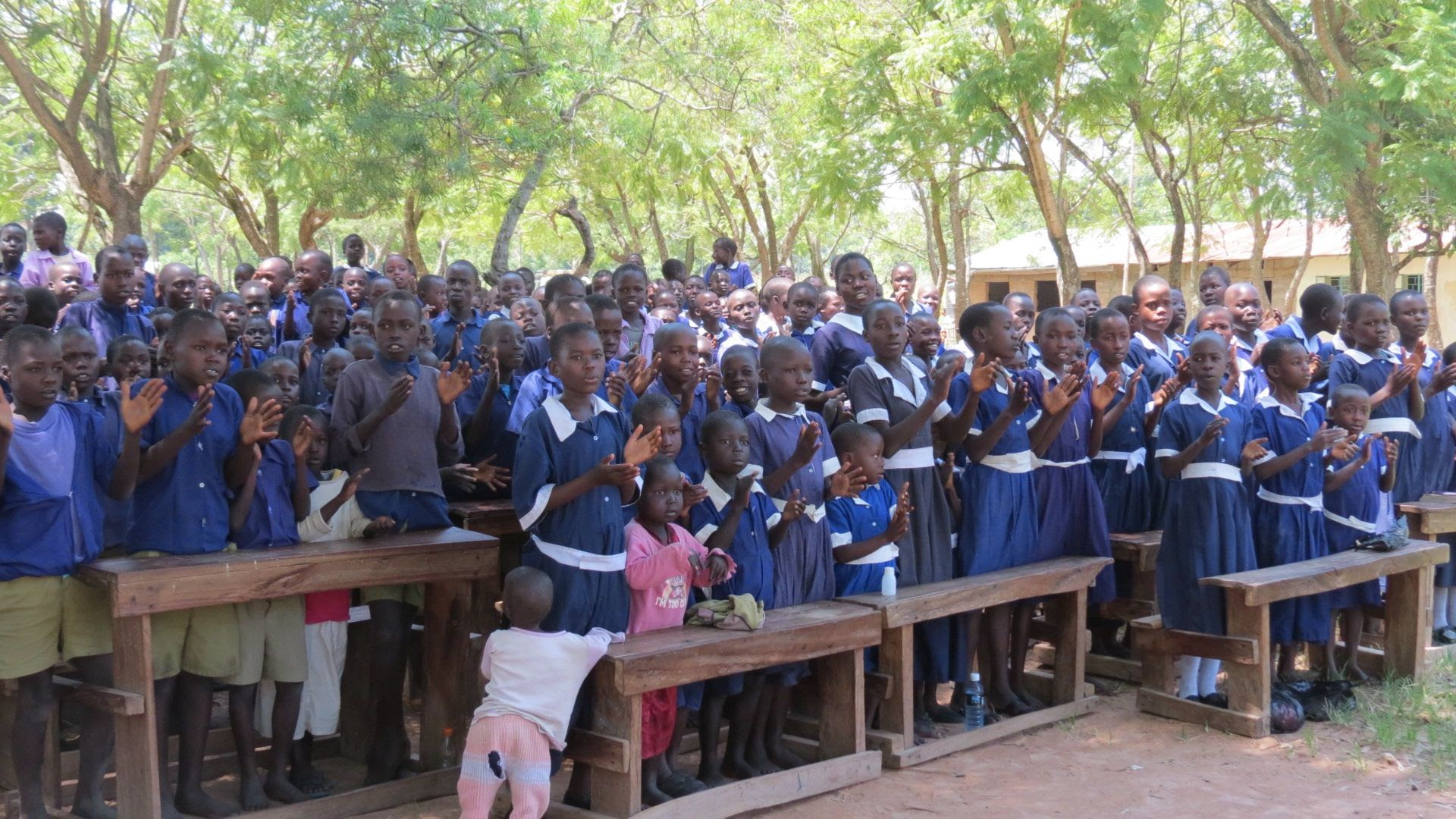
Kiwimbi is tackling one of the key issues in Kenya: access to quality education. During my time as a teacher, I observed numerous challenges facing Kenyan students. If you were to ask someone from a neighboring country like Uganda or Tanzania, they might say that the Kenyan education system is relatively good. However, this is largely true only for the upper class, as expensive national and private schools take in the top 1% of students and make them college ready. I worked in a school more similar to what an average Kenyan might experience (and similar to schools supported by Kiwimbi): no running water, not enough textbooks, not enough teachers, and students who often come from low-income households. All of this translates to low passing rates, and if you don’t pass the final exam during your senior year, you don’t go to college, you don’t get quality employment – your 12 years of schooling becomes functionally useless.
The teachers and I worked up to 60-70-hour weeks during the school year to give our students the best possible chance at passing the senior-level college entrance exam. However, in my first year, only 2 out of 56 graduating seniors passed – that’s less than 4%. The US average is 87%. These stark numbers tell the story of the challenges facing Kenyan education.
My students faced numerous issues that were often beyond our control. Many weren’t getting sufficient nutrition, with their only meal being the beans and corn served at school lunch. At home, many worked on their family’s small farmland to help feed the family, leaving no time for studying or homework. At school, most classes are taught in English, but many students don’t understand the language well enough to learn effectively in the classroom.
After moving from teaching to volunteering with Kiwimbi, I immediately noticed the quality and breadth of the programs that run from the Kiwimbi Library and Community Learning Center. The focus is on holistic approaches to education: offering meals for primary students when none are available at school, bringing short-term teachers and mentors to schools without sufficient staffing, and arming those teachers with improved and modern teaching strategies. I was fortunate to see the fruits of their work – I supported the mathematics program for high schoolers, and we saw 72% of our students passing mathematics, the subject with generally the lowest passing rate. This kind of result is a sea change and underscores Kiwimbi’s impact. This success comes in addition to other Kiwimbi programs focused on improving village nutrition, tree planting, technology literacy, vocational jobs, and more.
Kenya has so much potential. If you visit, you can feel the energy, the creativity, the entrepreneurship, and the warmth of its people. I am not surprised that Africa is projected to be a dominant player in the near future, and education is its best hope of leaping forward. After volunteering with their programs, I joined the board of trustees for Kiwimbi International and am continuing to support this important, meaningful work in any way I can. I hope you’ll join me in being part of the future of Kiwimbi and the future of Kenya.