What We Do
Kiwimbi Kenya NGO: Teach at the Right Level (TaRL) Education Interventions
Kiwimbi Kenya NGO operates under the inspiring tagline of “opportunity through education.” Committed to transforming lives through learning, Kiwimbi Kenya employs evidence-based interventions derived from successful educational models around the world. One such approach is the renowned Teach at the Right Level (TARL) method, originally pioneered by Pratham in India. Kiwimbi Kenya integrates TARL into its programs to ensure that students receive personalized instruction that matches their individual skill levels.

All volunteers at Kiwimbi undergo comprehensive training in assessing students’ abilities and placing them in appropriate groupings for TARL interventions in bothliteracy and numeracy. Equipped with an understanding of the science of learning, Kiwimbi volunteers also utilize spaced repetition techniques to optimize learningoutcomes. Moreover, these dedicated volunteers serve as mentors, providing guidance and support to the students they work with. By combining evidence-based strategies, personalized instruction, and mentorship, Kiwimbi Kenya empowers students and opens doors to a brighter future filled with opportunities.
All volunteers at Kiwimbi undergo comprehensive training in assessing students’ abilities and placing them in appropriate groupings for TARL interventions in bothliteracy and numeracy. Equipped with an understanding of the science of learning, Kiwimbi volunteers also utilize spaced repetition techniques to optimize learningoutcomes. Moreover, these dedicated volunteers serve as mentors, providing guidance and support to the students they work with. By combining evidence-based strategies, personalized instruction, and mentorship, Kiwimbi Kenya empowers students and opens doors to a brighter future filled with opportunities.
Promoting Organic Farming
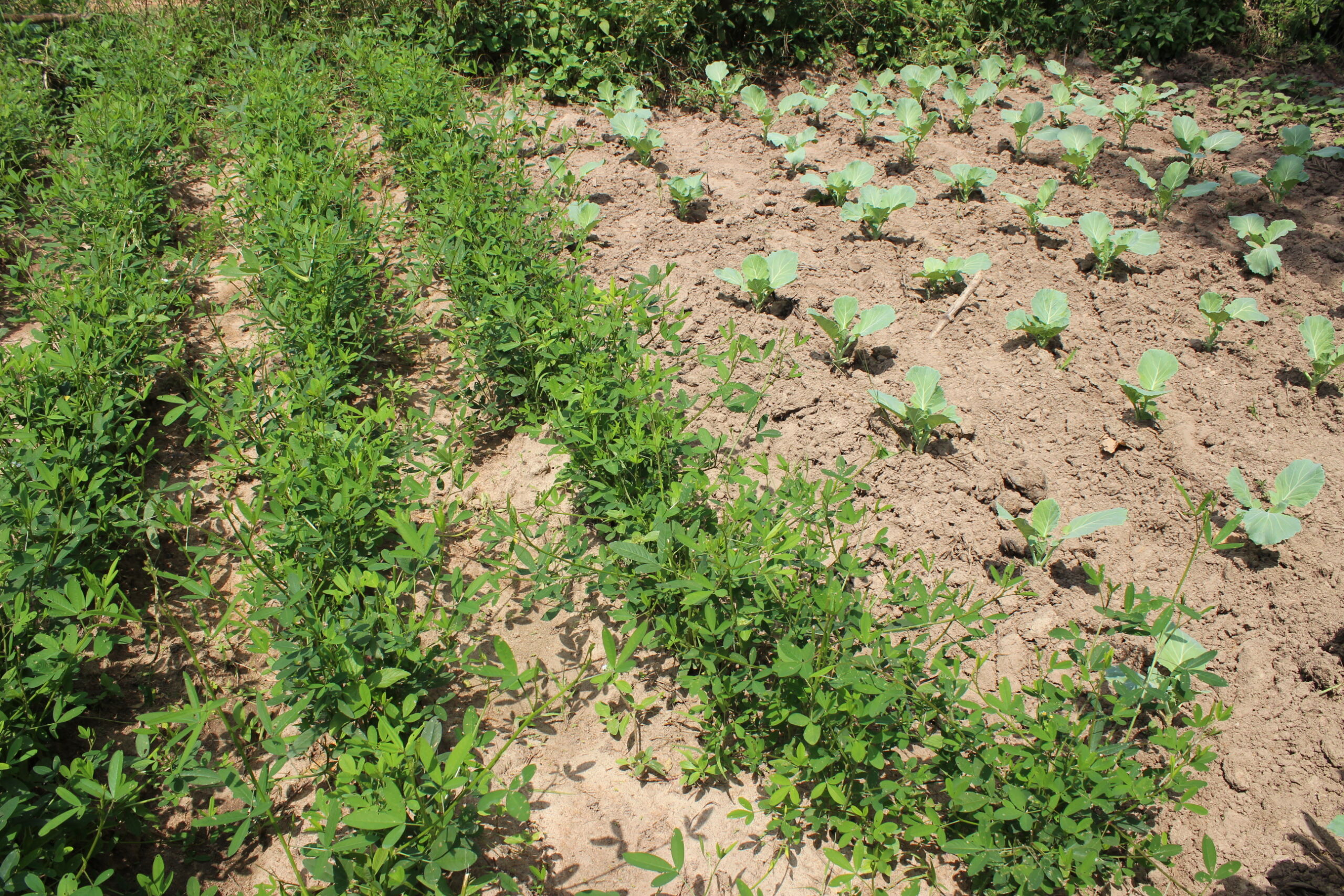
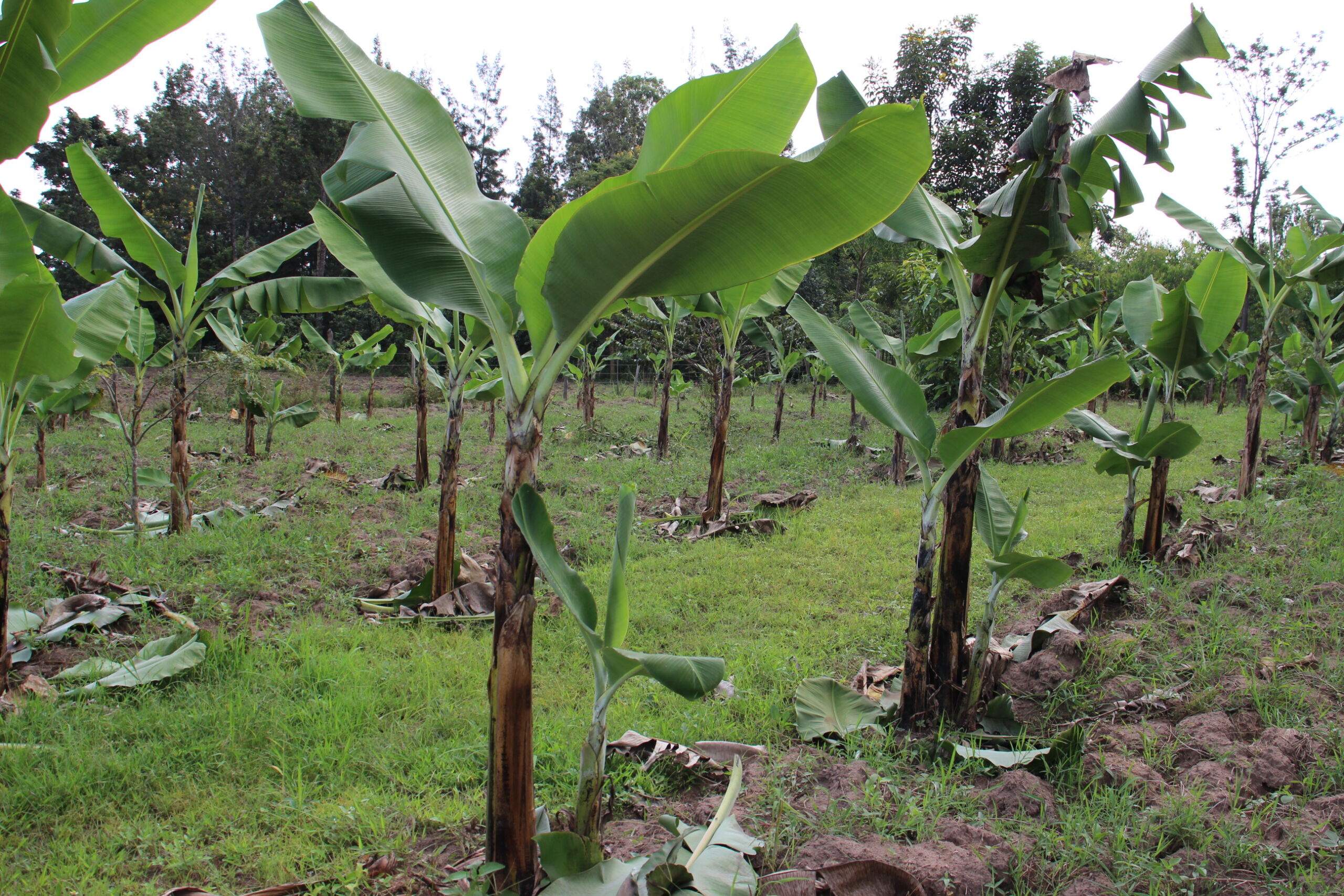
Kiwimbi Kenya is dedicated to promoting sustainable agro-forestry practices and organic farming methods that prioritize the cultivation of nutritious indigenous vegetables and resilient drought-resistant crops like millet and sorghum. By focusing on these approaches, Kiwimbi Kenya empowers rural families in Amagoro to attain food security and improve their overall well-being.
We Believe in Education
Our mission began in the rural Kenyan town of Amagoro, in Busia County. we started out by creating camp programs for local youth and creating an exam preparation program at Amagoro Primary School. Local officials granted us use of a building soon thereafter where we were able to establish the first free public library in the county. This also meant we had space to add vocational training and arts programs for students. For most of the children we serve, this is their opportunity to prepare for a future beyond the Grade 8 level and beyond the subsistence farming that dominates their lives.
We support education by:
- running camp programs and mentoring
- offering classes for young adults to learn trade-skills
- preparing Grade 8 students for the national KCPE exam, focusing particularly on English and Math, in 3 primary schools (approximately 200 students)
- providing access to books, newspapers and other resources in our Library, in satellite libraries that we have established and through regular delivery of books to over fifty schools in villages nearby.
- coordinating with local and national organizations including The Ajira Project, The Government of Busia County, Story Moja, St. Thomas Amagoro Girls High School, other local schools and the Council of Village Elders
These steps impact the community as a whole where parents struggle to cover the costs of education, even going so far as to sell precious land in order to raise funds to send a child to school. The people have embraced our efforts, contributing artifacts to our small museum and volunteering their own time to assist with vocational training, tell traditional stories and sing with the youth, and support our outreach efforts.

Our Programs
We see a world where all people are empowered through education to enrich their lives and reach their fullest potential. To achieve this vision, our mission is to partner with underserved communities to create educational opportunities through locally run libraries and community learning centers.
DIRECT TO SCHOOL
Kiwimbi Prep for Success Program
Kenya has recently changed its policy and now requires all students continue on to secondary (high) school. The mandatory Kenyan Certificate of Primary Education (KCPE) exam is now used to determine which school a student will attend. This test, given only in English rather than Swahili or the local ethnic language of the children’s homes, determines if students can advance to secondary school and the quality of school they may attend. The secondary school system is divided into levels: Sub-county, County, Extra-county and National. National schools compare favorably with excellent schools here in the US. Conversely, Sub-county schools may not even have the space to put all of their classes inside and when they do, they may have a teacher, a piece of chalk and a board with little else to accommodate 50, 100 or more students at a given grade level. A child’s placement on the national exam determines whether they are assigned to a National School, a Sub-county School or some school in-between.
Prep for Success is a direct-to-school program that combines school-time, after-school and camp programs to strengthen the academic skills of Grade 8 students with a focus on English and math. Kiwimbi utilizes teacher assistants and provides materials for students. Without teaching assistants, Kenyan teachers can face classes with 80 or more students. With Kiwimbi teaching assistants the classes can be broken into smaller, ability-based learning groups. The lunches we provide are another very important component of Kiwimbi’s Prep for Success Program. Besides insuring that these children have access to at least one nutritious meal a day, a key to learning, the lunch program eliminates the need for students to walk home, sometimes miles, midday for food. This ensures that the children have the time and energy needed to focus on their education.

COMMUNITY CENTRE & LIBRARY
In the spring of 2013, Kiwimbi established a physical presence in a building made available by Busia County. The Kiwimbi Community Center and Library is the first free public library in the county and has become a hub for the community. It welcomes between 200 and 500 visitors each day, both school children and adults, seeking educational tools and broader knowledge. Access to the Library is free, critical in this low-income area.
Many of Kiwimbi’s programs, such as the Prep for Success camps, operate here. The Library also contains over 20 e-readers with the texts of the Kenyan curriculum for Grade 8 students. With e-readers, internet access, magazines, over 20,000 volumes, a museum and art exhibits, the Community Center and Library provides an enriched environment for both students and townspeople – another key to learning.


ARTS
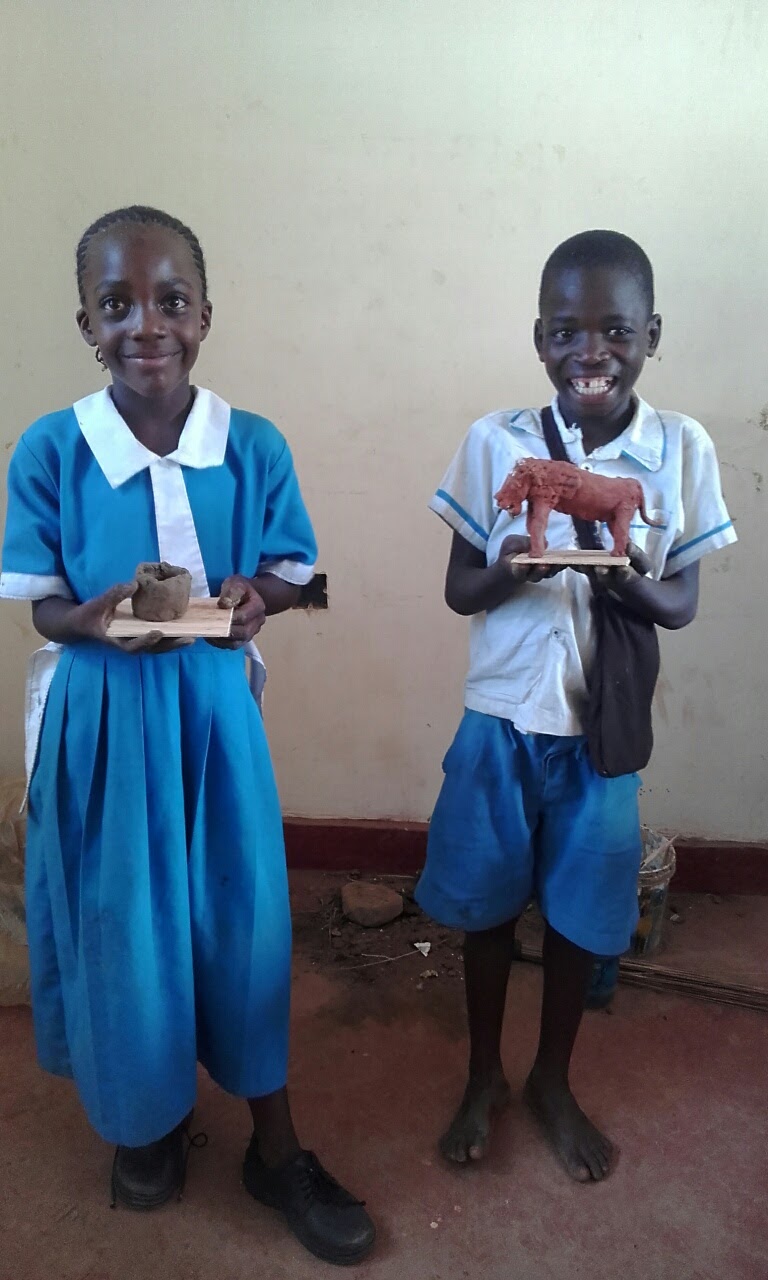
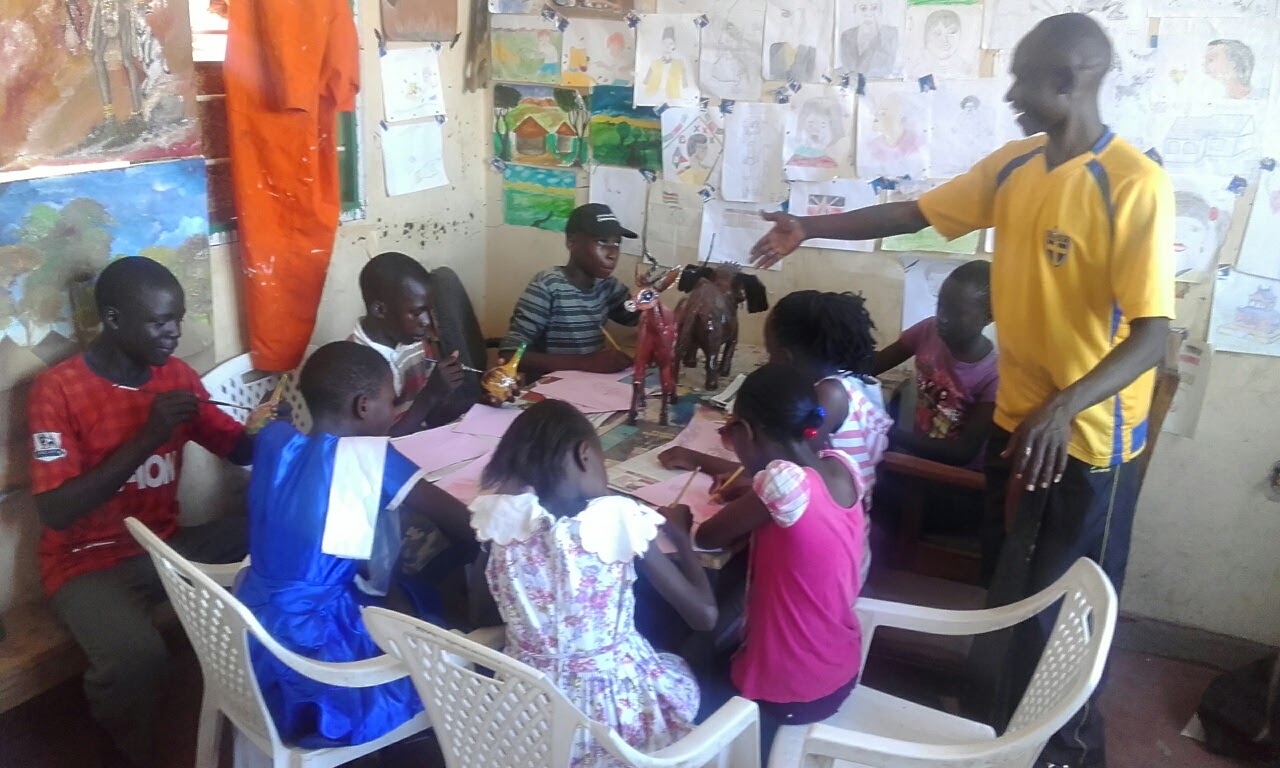
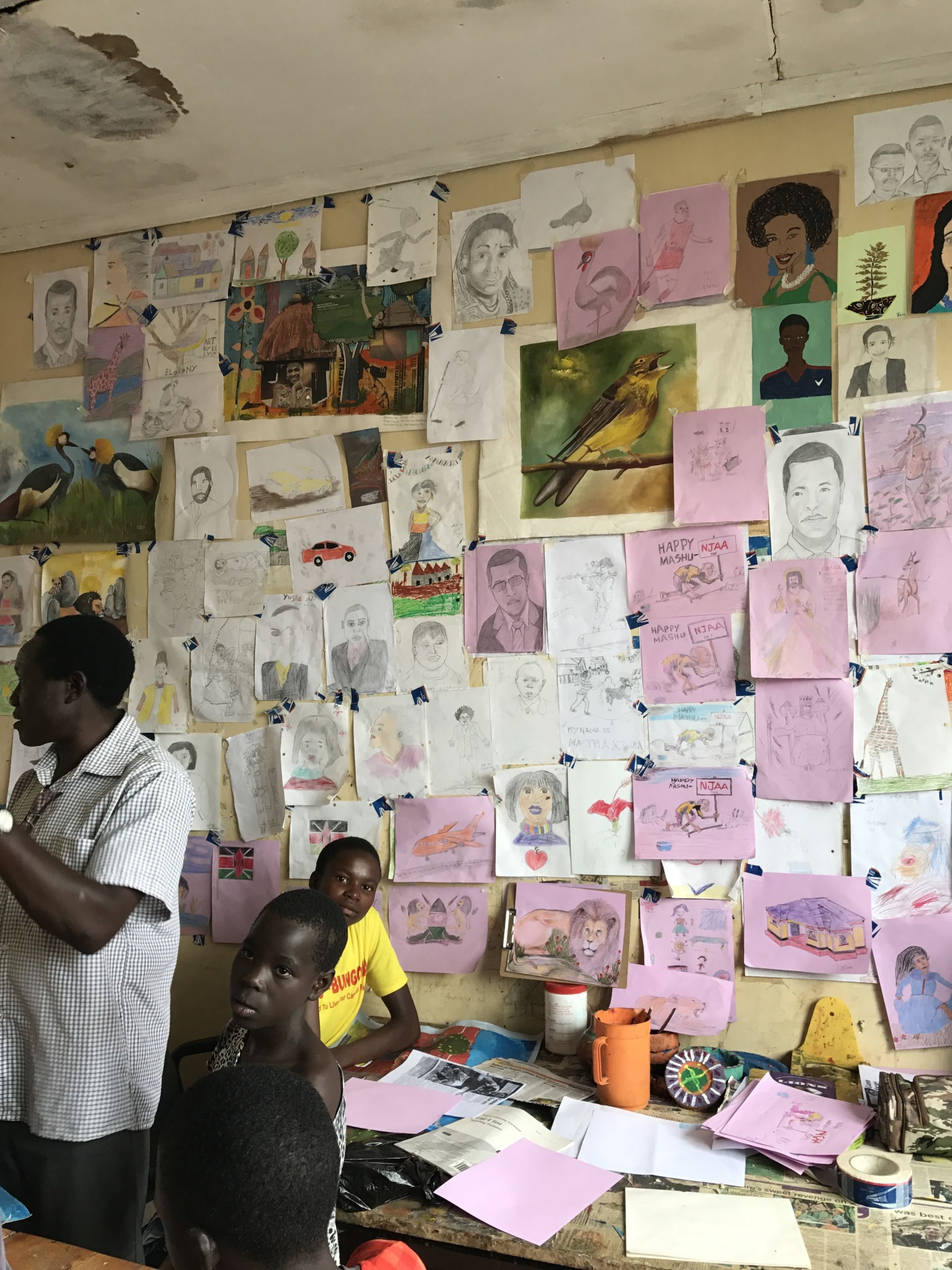
Kiwimbi has placed a high level importance on the preservation of cultural arts including weaving, storytelling, beading and dance; as well as the fine arts including painting, drawing and pottery. At place of importance within our Community Center in Amagoro are both a museum featuring many Teso cultural artifacts and a wonderful art room, a space filled with the art created by local community members.




VOCATIONAL
Even given the improved academic success rate of young people in Kiwimbi’s KCPE-Prep program, the large majority of youth will not have the opportunity to attend secondary school. To meet the needs of these children, Kiwimbi has developed a variety of vocational training programs including art, carpentry and tailoring.
The tailoring program provides students with the skills needed to pass a national practical exam. In 2016, all of Kiwimbi’s tailoring students were certified and passed the exam, and members of the current class who have been working on their skills for a few years will be taking their certification exam in 2022! They can do piece work, repairs and, significantly, make complete school uniforms. This means that when they leave Kiwimbi they are in a position to make uniforms for surrounding schools. This steady market provides an opportunity for these young adults to establish a livelihood.

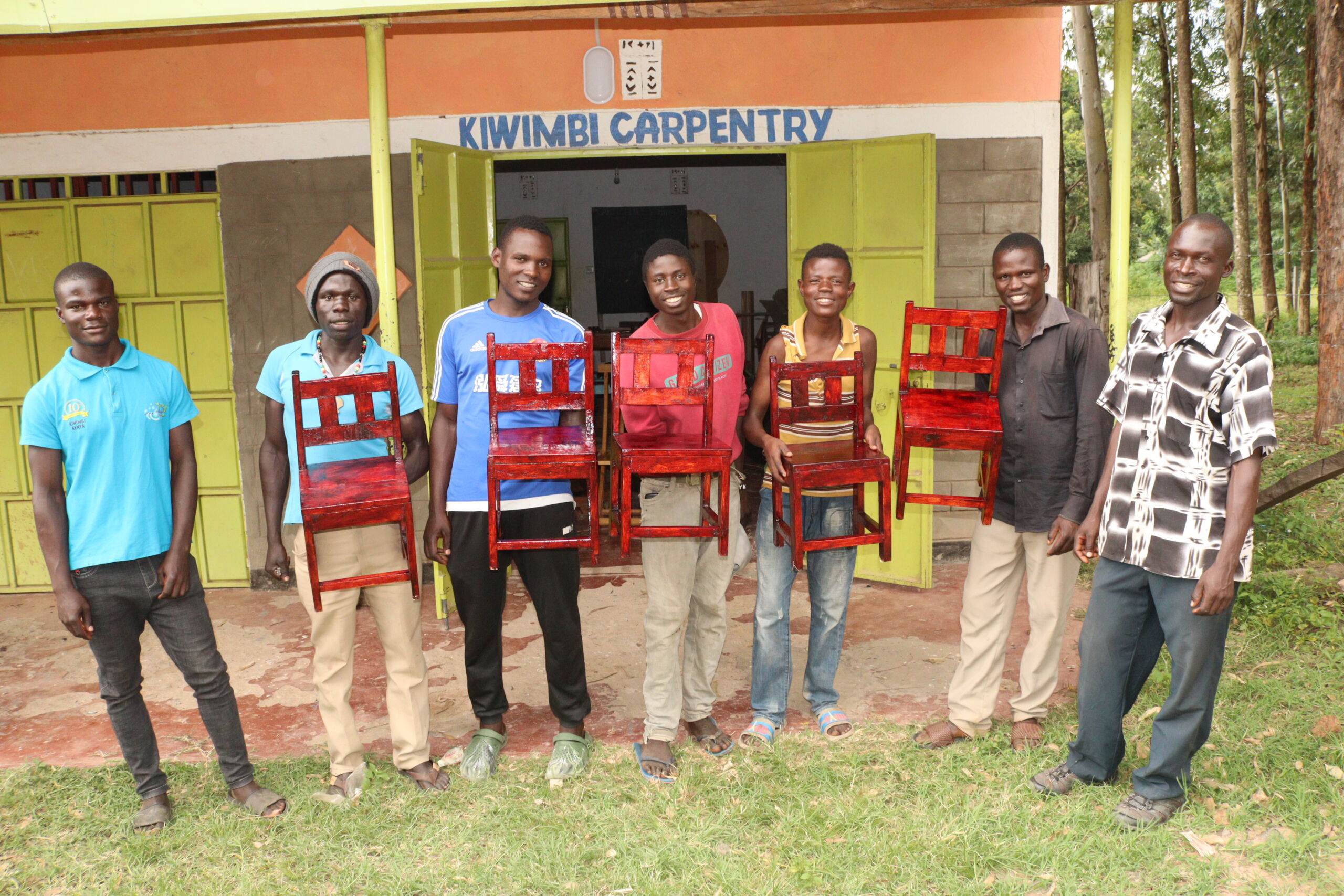
The carpentry program teaches important skills necessary to build a quality product including accurate measurement, joining techniques and fine finishing. While learning and strengthening these skills, the students create items that are useful at Kiwimbi and in our wider community. Their projects include making and improving upon the design of sturdy wooden chairs for the Library, building display cabinets for the tailoring department and recently repairing doors and desks at a local school. The carpentry students are able to use their skills to earn a living completing paid projects for individuals while at the same time continuing to refine their skills in our training program.
Our Stories
Education Opens Doors
Some of the older students were assigned a project to write a short autobiography about themselves. Many of these stories have been brought together in the book KAP The Kiwimbi Autobiography Project, which was edited by Donna Baier Stein.
Nelson

“There is a saying that ‘without education you are nothing in this world.’ Nelson Mandela said that, ‘Education is the only permanent riches that you can get from your parents.” I really enjoyed going to school so as to be an educated person in the near future. Despite the obstacles, I did not give up on life. I was sick all the time and there was a time I almost died in the hospital. That was not the only obstacle. Challenges are there and we are supposed to be strong in order to overcome them.
Be strong and courageous in everything you do. Never lose hope in life despite the challenges and obstacles, which are there to strengthen our lives. Finally, in happy moments, praise God; in quiet moments, worship God; and in painful moments, trust God.
Never lose hope in life. Be strong.” – Nelson (St. Paul’s Amukura High School)
Winnie

“On Friday morning while at assembly, the academic teacher announced that money was needed for the exam and I was flabbergasted at how I would get that money. Tuesday, we had to sit for the exam. During that weekend I tried my best, but in vain. I persevered until Monday. I woke up on Monday morning to prepare my siblings to go to school, and I headed to the school. In class, the teacher was calling out names of those who had paid and I wasn’t among them. The class teacher called me out and I remember walking towards him as if I had no blood within me. He sympathized with me and gave me kshs 200 and I was able to pay the fee. I was able to sit with others and successfully did the exam.
I am hoping to become a lawyer and not only help my family, but also the whole community at large.” – Winnie (Moding High School)
Charity

“In most cases, people prefer a boy to progress with his studies over a girl. As the boy proceeds to High School, a girl is being forced into marriage and has no chance to defend herself. She is seen as a worthless object in the family. After getting married she leads a dog’ life, full of anguish without an end. Suppose she was given a chance to continue with her studies, would she have had such a miserable life?
Girls can lead boys with prowess. Whatever girls and women want to do; they can do indispensably.” – Charity (Amagoro Girls High School)
Help Teach a Child Today with Your Donation!
Why?
Because your simple act of kindness can change a life forever!